Cut Through 2% Noise: DEXA Accuracy and Where to Book in the U.S.
Learn how DEXA precision and the ISCD 2% benchmark affect fat and bone scores, when changes are real, how to reduce noise, and where to book verified U.S....
DEXA scans measure percent body fat with repeatable precision of roughly ±1 to 2% under standardized testing conditions, making them one of the more dependable tools available outside a research lab. Trueness against gold standard 4 compartment models is a separate question, and bias can run larger in certain populations. The International Society for Clinical Densitometry backs this precision range, and peer-reviewed comparisons echo it. That combination is why DEXA remains a trusted way to track body composition change over time, provided you understand what the numbers actually represent.
TL;DR:
- DEXA scans typically achieve a percent fat measurement precision within 2%, but individual variability can cause errors of up to 5% against reference methods, especially in older adults.
- Newer DEXA machine models deliver tighter precision, and accuracy depends heavily on proper calibration, training, and consistent scanning conditions.
- To ensure reliable results, patients should avoid heavy exercise, metal, and calcium supplements before scans and always retest under similar hydration and time-of-day conditions.
- Changes in body composition readings below 1-2% may fall within measurement noise, requiring multiple scans over time to identify meaningful trends.
- Selecting a verified clinic that performs phantom quality control and shares precision data is crucial for trustworthy body composition tracking.
Table of Contents
- How DEXA Measures Body Composition and What the Report Shows
- What Peer-Reviewed Research Says About DEXA Precision
- How to Prepare for a DEXA Scan and Get Consistent Results
- How to Tell If a Change in Your DEXA Numbers Is Real
- Finding a Verified DEXA Center That Follows the Standards
- Sensible Use of DEXA Results
- Where to Book a Verified DEXA Scan
- Sources
- FAQ
How DEXA Measures Body Composition and What the Report Shows
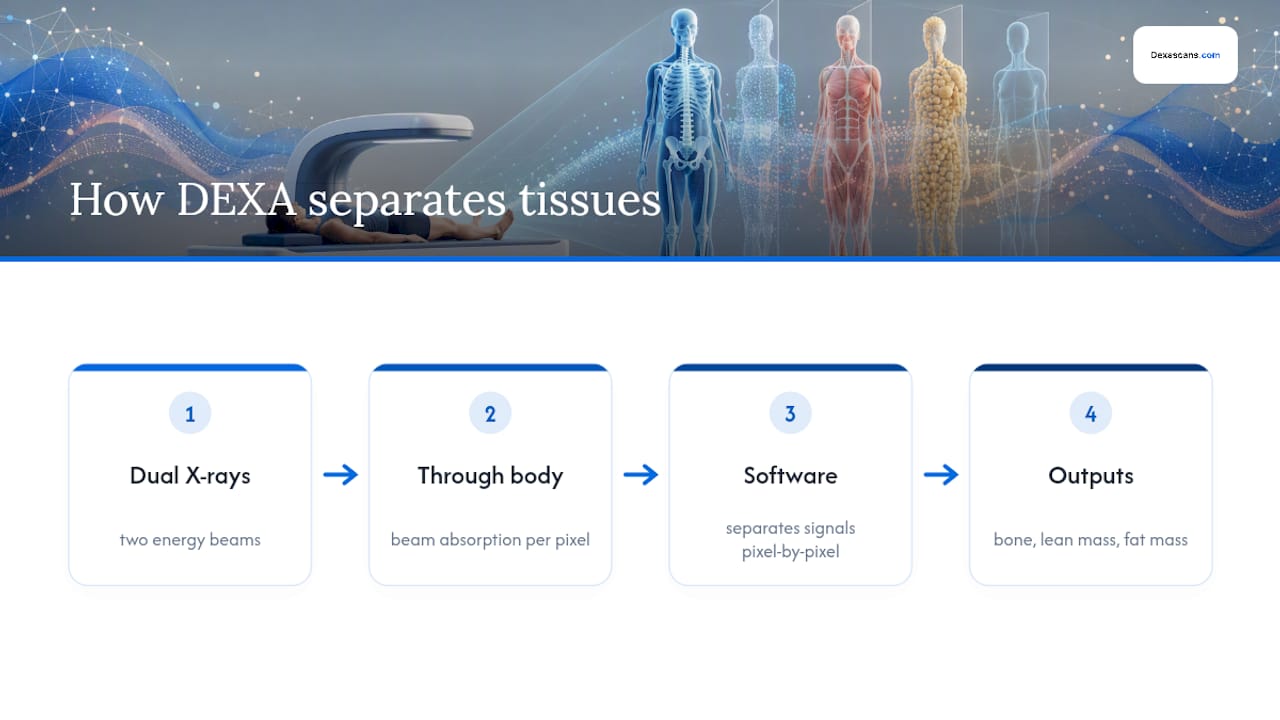
A DEXA scan sends two X-ray beams at different energy levels through the body. Bone absorbs both beams differently than soft tissue, which lets the scanner’s software separate bone mineral content from lean mass and fat mass, pixel by pixel. That is the entire mechanical trick behind the technology, and it is why Radiologyinfo lists DEXA as the standard, low-radiation method for body composition and bone density assessment alike.
The printout you get typically includes whole-body percent fat, regional breakdowns for arms, legs, trunk, and the android/gynoid regions used to flag central fat patterns. Many reports also list a visceral fat estimate. Treat that number with some caution. It is a software-derived approximation based on trunk geometry, not a direct volumetric measurement the way a CT scan would produce.
This is where the distinction between trueness and precision matters. Precision is whether a scan gives you the same number on repeat testing. Trueness is whether that number matches an independent reference method. A DEXA scan can be highly precise and still carry a small systematic bias, and both facts can be true at once.
What Peer-Reviewed Research Says About DEXA Precision
The ISCD sets the professional bar for how tight DEXA measurements should be. Its position statement recommends minimum acceptable precision of 2% for percent fat, 3% for fat mass, and 2% for lean mass, benchmarks every accredited technologist is expected to meet through phantom testing and in-vivo precision studies.
Independent validation research generally supports that range while adding nuance about bias. A 2022 study in the British Journal of Nutrition found that DXA and air-displacement plethysmography produced low group-level error, but individual-level variability was substantial, with DEXA overestimating percent fat by roughly 1 to 2% in some cohorts and standard error of estimate values between 1.6% and 2.8% depending on the group tested. Older-adult populations can see wider swings. One frequently cited comparison found total error near ±5.0% when DEXA percent fat was checked against a comparator method in that age group, a reminder that bias is not uniform across bodies.
- Modern lab-grade short-term precision often reaches whole-body fat and lean mass CVs of 1% or below.
- Consecutive-day precision, which better reflects real-world retesting, can run two to three times larger than same-day precision.
- Device generation matters: newer narrow fan-beam and iDXA systems tend to show tighter precision than older models, though bias versus 4-compartment references still varies by machine and population.
The number to remember: ISCD’s 2% threshold for percent fat precision is the baseline every quality clinic should be hitting, and it is the figure worth asking about before you book.
How to Prepare for a DEXA Scan and Get Consistent Results
- Remove all metal, including jewelry, underwire, and anything with zippers or snaps.
- Wear light, similar clothing every time you test, since bulky fabric can add noise to soft-tissue readings.
- Skip calcium supplements for about 24 hours before your scan, since pills in the digestive tract can create false-dense spots near the spine.
- Avoid heavy exercise in the hours before your appointment, since fluid shifts can move fat and lean mass numbers slightly.
- Book at the same time of day, in a similar hydration state, whenever you retest, to reduce daily biological noise.
- Ask the clinic what machine model and software version they run, whether they perform phantom QC, and whether they can share their in-house precision or least significant change values.
How to Tell If a Change in Your DEXA Numbers Is Real
Least significant change, or LSC, is the threshold a result has to cross before you can call it a genuine change rather than measurement noise. It is calculated directly from a facility’s precision error, which is exactly why same-day precision numbers can be misleading on their own.
Same-day rescans tend to understate real-world variability because the body does not move or shift fluid between two scans taken minutes apart. Consecutive-day precision testing captures that natural variation, and research on DXA precision shows it can run two to three times larger than same-day figures.
- A percent-fat change under roughly 1 to 2% often falls within normal test-retest noise for a well-calibrated system.
- Lean mass changes typically need to clear a similar margin before they represent something beyond measurement error.
- LSC should reflect your specific scanner, technologist, and population group, not a generic number pulled from unrelated research.
Bottom line for tracking progress: a single data point rarely tells the full story. Look for a trend across two or three scans, taken under consistent conditions, before you draw conclusions about real body composition change.
Finding a Verified DEXA Center That Follows the Standards
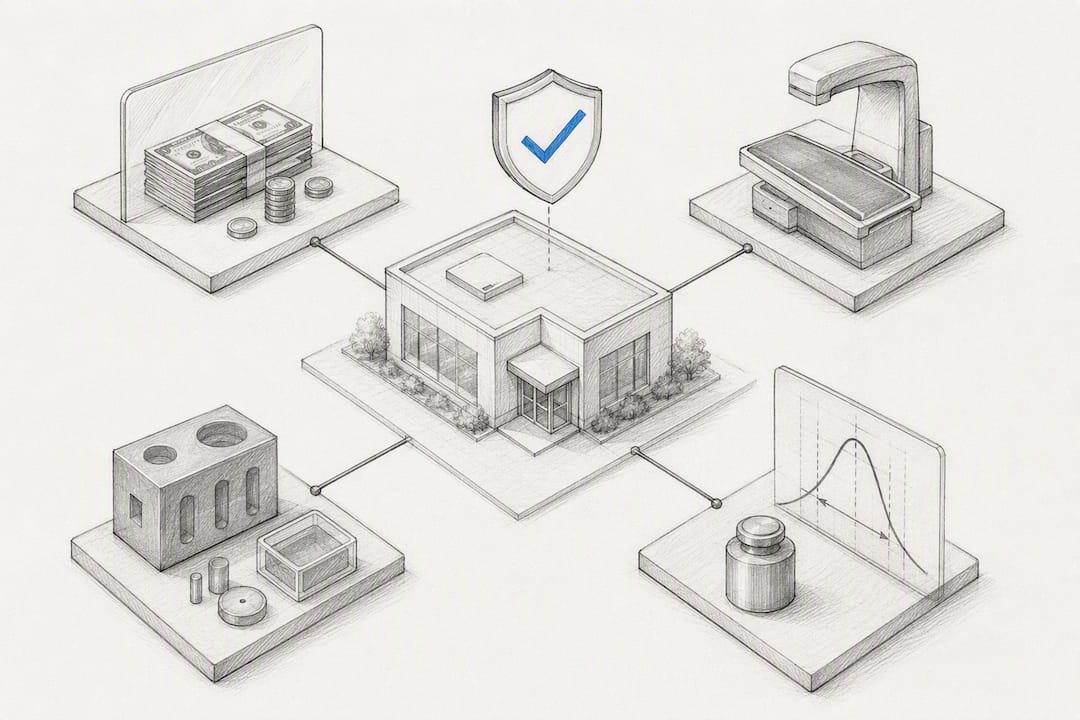
Accuracy is only as good as the clinic running the scan, which is exactly why Dexascans verifies more than 511 DEXA locations across 48 states and lets you book without a physician referral. You can compare cash pricing, check listed machine details, and use that information to ask each clinic directly about phantom quality control, precision testing, and least significant change reporting before you commit.
Sensible Use of DEXA Results
DEXA earns its reputation when clinics follow the protocol: calibrated machines, trained technologists, consistent positioning. Small month-to-month shifts usually reflect noise, not real change, so weigh trends over single readings. If a number looks wildly out of step with how you look or feel, or a clinician flags something structural, that is the point to escalate toward CT, MRI, or a specialist review rather than rescanning again on the same machine.
— Erik
Where to Book a Verified DEXA Scan
An alternative to guessing which local clinic runs a properly calibrated machine is to use a platform that lists verified centers with transparent cash pricing, allowing you to compare options by machine model and price before contacting clinics.
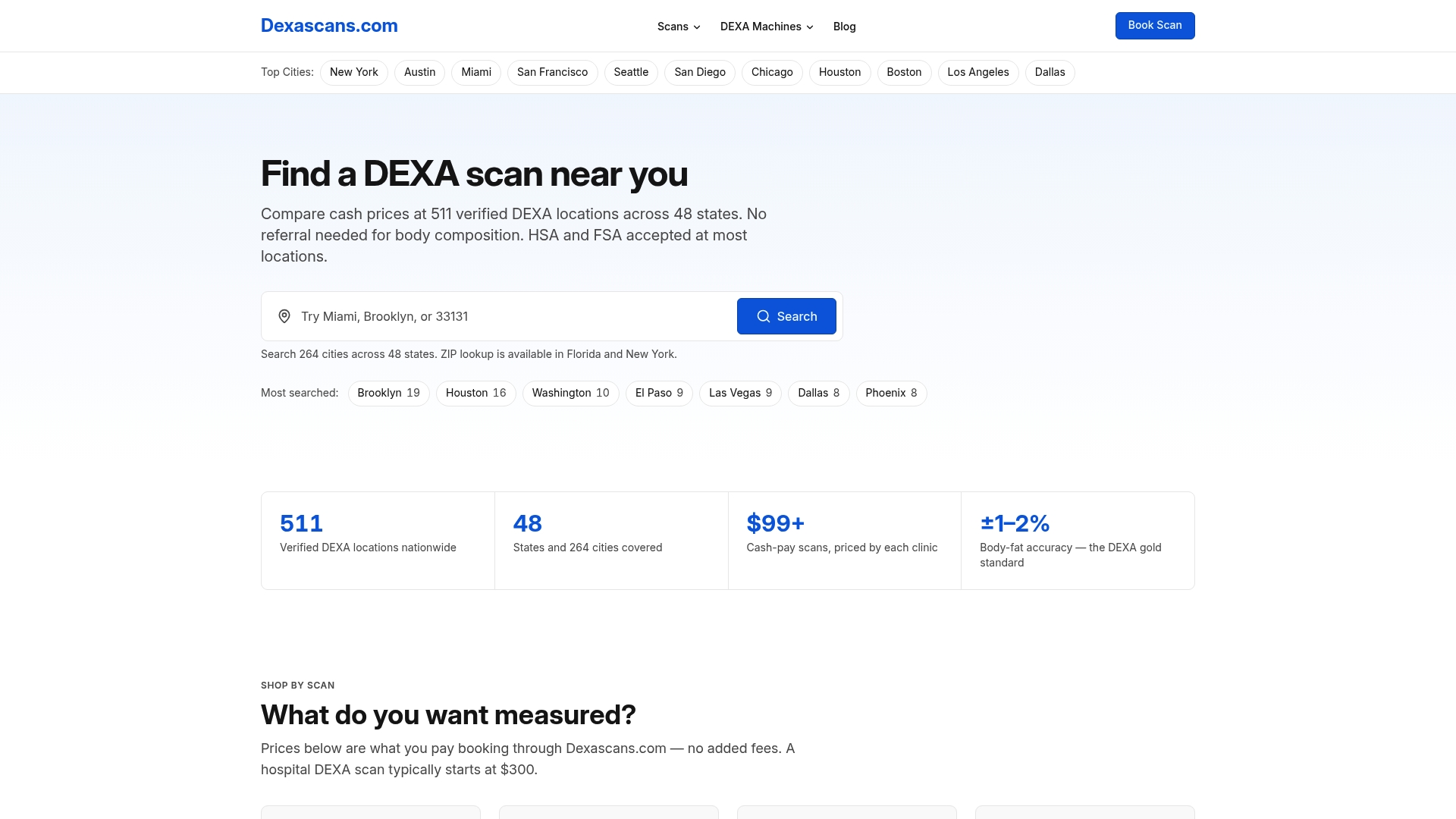
Before booking anywhere, ask three questions: what scanner model do they run, how often do they perform phantom quality control, and can they share precision or least significant change data for repeat testing. A clinic that answers confidently is one worth trusting with your numbers. Search DEXA scan locations near you on Dexascans to compare verified centers by price and machine type, then book directly with no referral required.
This article is general information, not a substitute for advice from a qualified doctor. Consult a qualified healthcare professional about your own circumstances before acting on anything here.
Sources
Every accuracy figure assumes a well-calibrated machine and a careful technologist. Reality does not always cooperate.
- ISCD position development: DXA body composition (task force report, 2013)
- Radiologyinfo
- Body composition by DEXA in older adults - PubMed
Pro Tip: Ask the clinic whether their scanner uses narrow fan-beam or older pencil-beam technology. Newer fan-beam systems generally deliver tighter precision, and it takes one phone call to find out.
FAQ
What is the margin of error for a DEXA scan?
Under standardized conditions, DEXA typically achieves percent-fat precision within the ISCD’s 2% benchmark, though bias against 4-compartment reference methods can run higher, up to around 5% in some population studies.
Are DEXA scans sometimes wrong?
Yes. Results can be skewed by poor machine calibration, technician positioning errors, metal on the body, or recent calcium supplement use, which is why quality-controlled clinics and consistent testing conditions matter.
What should you never do before getting a DEXA bone scan?
Avoid taking calcium supplements for about 24 hours beforehand, since undigested pills can create dense artifacts near the spine that distort your results.
How does DEXA body fat accuracy compare to BIA or ultrasound?
DEXA generally outperforms bioelectrical impedance and quantitative ultrasound for detailed body composition, since those tools are useful for pre-screening but are not considered interchangeable with central DEXA for precise measurement.
Can two different DEXA machines give different results for the same person?
Yes, device generation and calibration differences between machines can shift both precision and bias, which is why cross-calibration and consistent phantom testing matter when comparing scans over time or between clinics.
Recommended
Medical Disclaimer: The information provided on this website is for general informational purposes only and is not intended as a substitute for professional medical advice, diagnosis, or treatment. Always seek the advice of your physician or other qualified health provider with any questions you may have regarding a medical condition. DEXA scan results should be interpreted by a qualified healthcare professional.